Increased international collaboration is critical to ensuring resilience and preparedness in the Baltic Sea
25. March 2026
The first ever Nordic-Baltic Maritime Resilience Summit gathered key stakeholders from the Baltic Sea area to Helsinki, to discuss resilience and preparedness from the maritime perspective. The event was both timely and relevant, as the geopolitical environment continues to evolve.
Europe is heavily dependent on sea traffic. That is particularly true for Finland, as 95% of exports and imports are transported by sea. The developing security environment in the Baltic Sea area, including the shadow fleet, attacks on critical underwater infrastructure, and increasing instability in geopolitical affairs give reason to open dialogue and collaboration between maritime stakeholders in affected states.
”The resilience of maritime operations is directly tied to our economic stability and competitiveness, as we are deeply dependent on maritime transports. The challenges we face from geopolitical instability to hybrid threats and shadow fleet vessels sailing in the Baltic Sea, do not respect national borders. Our response must therefore be equally coordinated. Collaboration is our strongest asset.” says Tiina Tuurnala, CEO at the Finnish Shipowners’ Association.
Representatives from nearly all the Nordic and Baltic countries around the Baltic Sea were in attendance, as sectoral experts from shipping companies, ports, insurance companies, the military, government authorities and political leadership were present at the summit. The discussions focused on concrete cooperation models, risk-management practices and operational approaches that help ensure the uninterrupted functioning of critical maritime transport chains and security of supply.
The Finnish Minister of Transport and Communications Lulu Ranne opened the event. She highlighted Finland’s internationally recognized strengths in preparedness, while making clear that there is still much to be done.
Disruptions of sea traffic highlight the urgency of coordinated preparedness
As the program continued with expert panels, best practice presentations and dialogue, the need for border-crossing cooperation, enhanced information exchange and planning ahead was underlined throughout the summit.
The ongoing situation in the Strait of Hormuz has once again highlighted what maritime professionals already know: sea traffic is vulnerable to disruptions with far-reaching consequences. Even critical transports can stop abruptly. The lesson is clear, preparedness requires advance planning and supportive systems, such as alternative transport routes and adequate insurance arrangements.
Preparedness must also account for economic stability and the human element. Public-private collaboration across operations is essential and training practices play an important part of preparedness.
International cross-border cooperation should remain a priority across all areas. As each country brings different strengths to the table, increased collaboration offers valuable opportunities to learn from one another.
“In Finland, we have done extensive work to ensure the continuity and resilience of our ports and maritime transport. In a globalized world, working alone is not enough. It is essential to share both threat assessments and valuable lessons with our closest partners. This event was the first of its kind to bring together experts to discuss maritime resilience at this scale. The day offered an excellent opportunity to exchange ideas with neighboring countries, as well as to engage in joint dialogue between industry and authorities” Piia Karjalainen, the CEO of the Finnish Ports Association sums up.
The Resilience Summit was organized by the Finnish Shipowners’ Association, The Finnish Ports Association and the Port Pool and Maritime Transport Pool, under the auspices of Finnish National Emergency Supply Agency (NESA) as part of the Nordic-Baltic Maritime Forum in Helsinki 23.- 26.3.26.
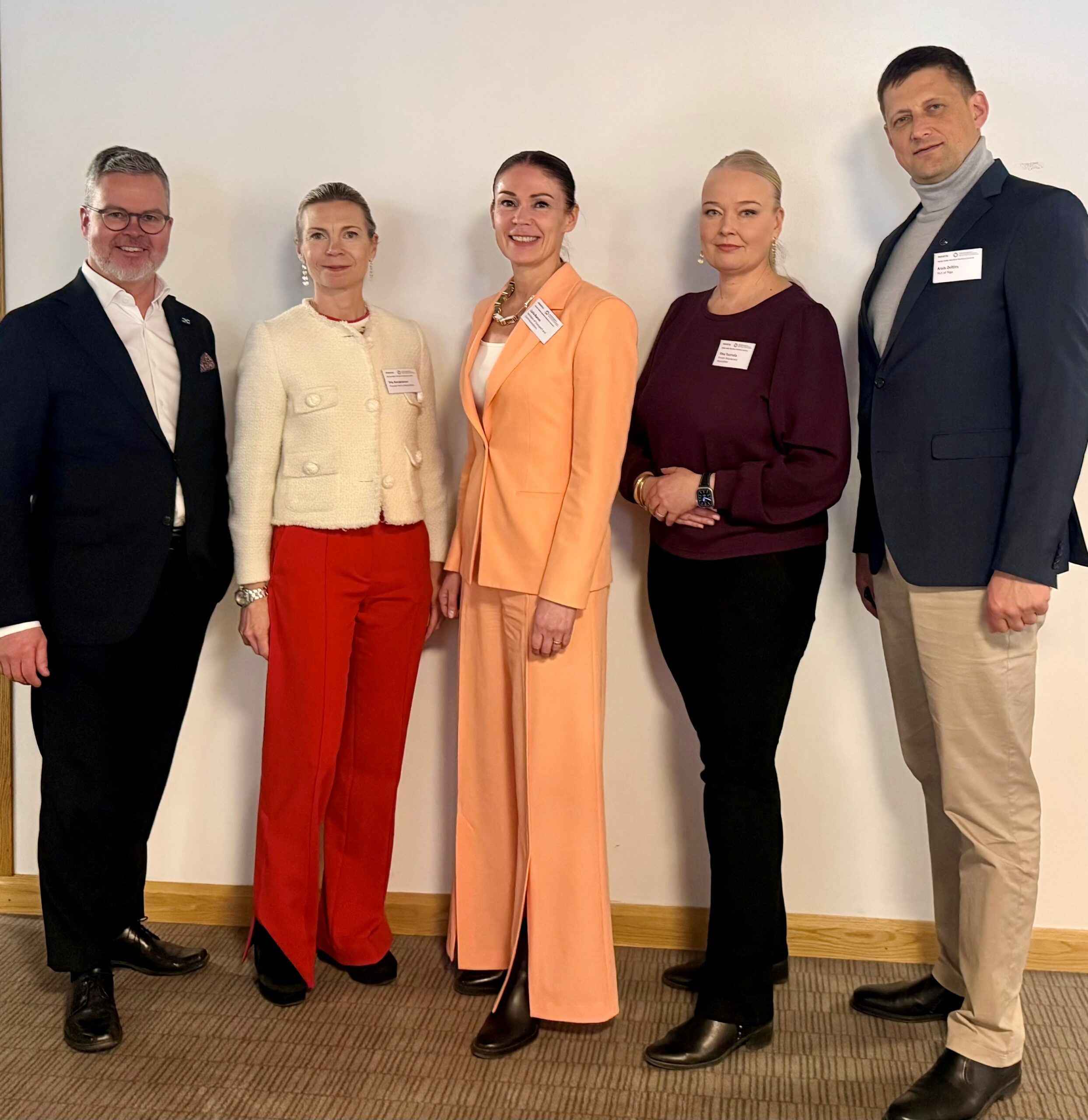
For more information, please contact:
Tiina Tuurnala, CEO, Finnish Shipowners’ Association
+358 40 547 6762, tiina.tuurnala@shipowners.fi
Piia Karjalainen, CEO, Finnish Ports Association
+358 50 435 5604, piia.karjalainen@suomensatamat.fi
Finnish Shipowners’ Association
Tällaista jäätalvea nähdään enää harvoin – kaikki jäänmurtajat käytössä
25. February 2026 - YLE.fi
World’s largest battery capacity for a RoPax vessel installed at Aurora Botnia
19. February 2026 - Wasaline
Rekordbatteri på Aurora Botnia – Ålands Sjöfart
18. February 2026 - Ålands Sjöfart
Godby tilaa kaksi uutta roro-alusta – Navigator Magazine
18. February 2026 - Navigator International
Godby Shipping orders two new roros
17. February 2026 - Godby Shipping